From brief to delivery: organise client work
A practical workflow for gathering a brief, agreeing deliverables, tracking revisions and recording completion.
In this guide · 6 sections
Client work can start in a message and end with files, versions and decisions scattered across several channels. Before choosing a tool, agree how an enquiry becomes a proposal, who approves the work and what counts as complete.
Follow a consultancy project: one report, a presentation meeting and one included revision. The same workflow can support photography, design, maintenance and other services, adapted to their deliverables and approval process.
1. Gather the brief before promising delivery
Record the client, objective, expected output, preferred deadline and main contact. Ask what already exists and what you still need to receive. If an answer could change the quote or delivery date, keep it as an explicit outstanding item.
The first conversation does not need a lengthy questionnaire. It needs enough information to decide whether you can prepare a proposal and which questions to ask next.
2. Turn the conversation into an agreed proposal
State the deliverables, format, deadline, price and included revisions. Explain what the client needs to provide and who approves. Revising a report is different from adding another area of assessment.
| Information | Example |
|---|---|
| Deliverables | Report and presentation meeting |
| Completion criteria | Report sent and meeting held |
| Revisions | One revision of the presented report |
| Approval | The contact named by the client |
| Additional work | A new topic assessed before work starts |
Keep the accepted version and the client’s confirmation. A positive conversation is not a substitute for agreement on the work.
3. Make the accepted work trackable
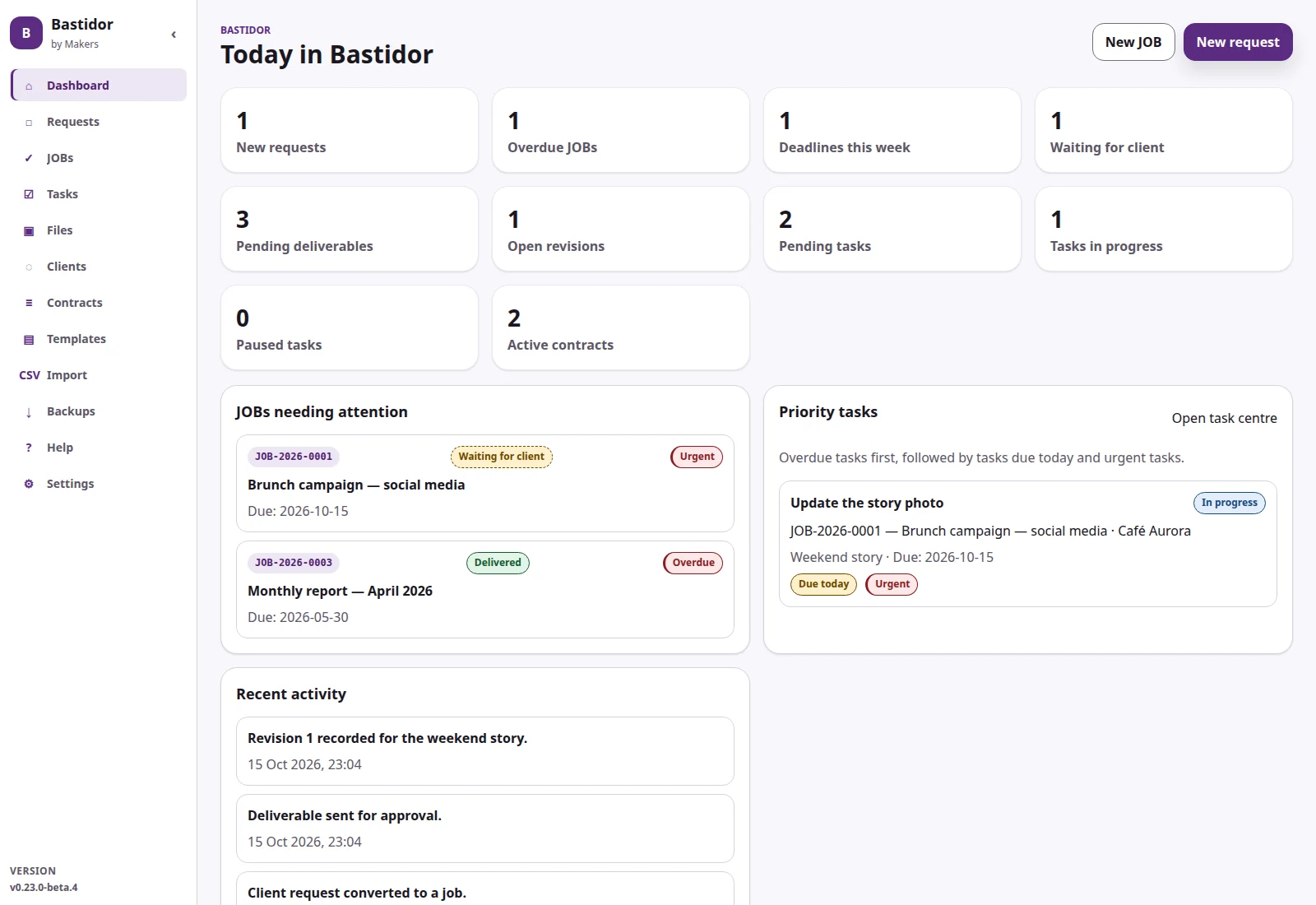
Create a job with tasks, dates and deliverables. Bastidor calls this record a JOB. Connect it to the client and originating request where applicable, so you do not have to reconstruct the context each time.
The tool does not decide whether the supplied material is sufficient. The person responsible checks that requirement and monitors blockers before starting work or committing to a date.
4. Record approval and revision separately
Record what you sent, when, to whom and the response. Link requested changes to the deliverable and agreed revision. If the request changes the contracted work, clarify the impact before proceeding.
In Bastidor, the operator records feedback received through the agreed client channel and tracks the history of approvals and revisions.
5. Complete delivery and prepare the next engagement
Confirm that the deliverables were sent, resolve outstanding items and keep the final decision. Record where the files are stored and who can pick up the work. Invoicing and payment confirmation remain in the tool you use for billing.
Review the process: what was missing at the start, where did work wait, and what should change in the next proposal? Use the history to refine the workflow and track delivery over time.
Choose tools around the workflow
Explorador Comercial supports company research. The WhatsApp Agent can gather conversational context and hand over to a person. Bastidor manages local client work on Linux with one main operator. Makers Studio can build a client portal or a bespoke integration.
Start with the part you need to organise. Explore service provider workflows or describe your process to assess the next step.